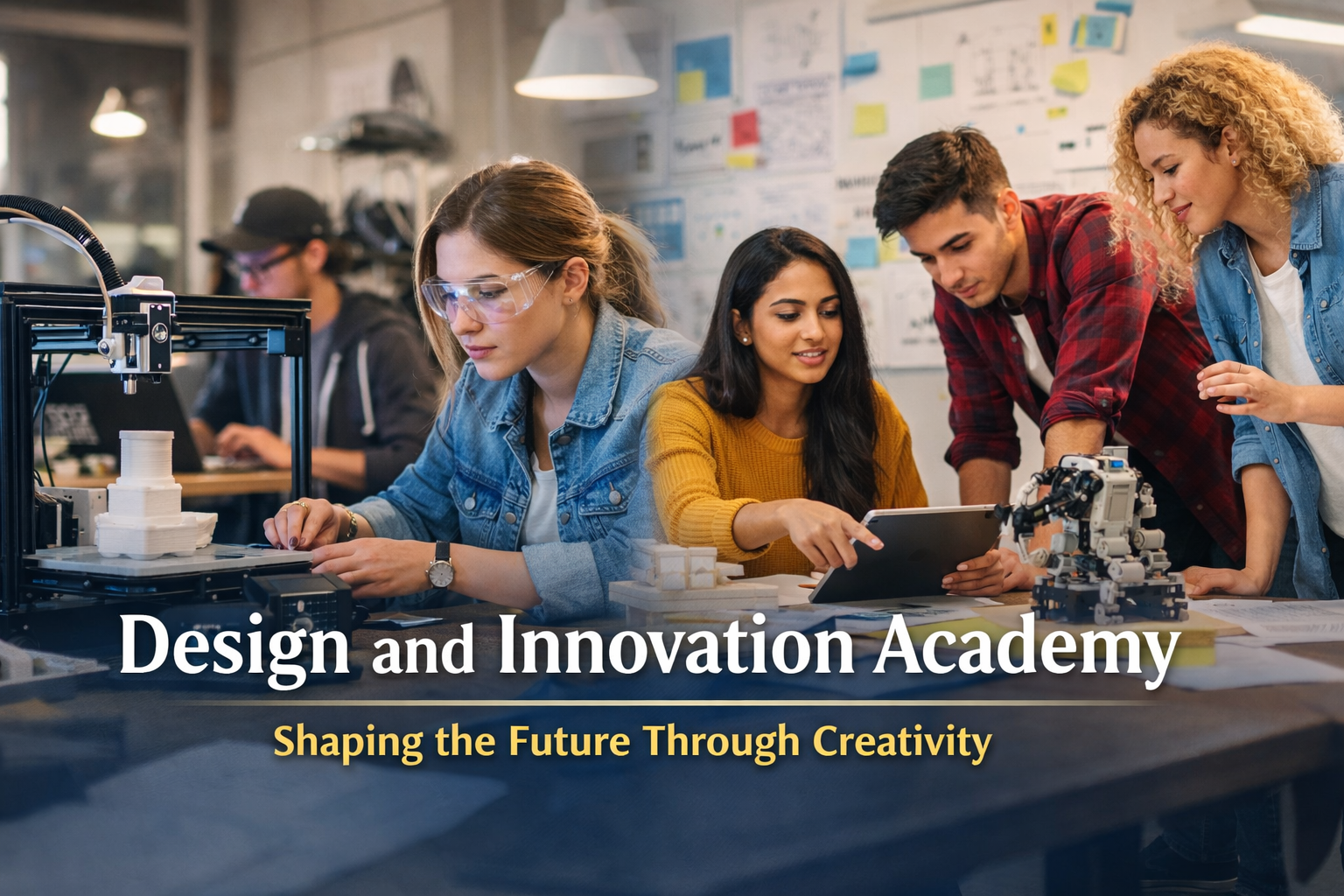
A Design and Innovation Academy is an educational environment dedicated to cultivating creativity, critical thinking, and technological innovation. These academies combine elements of design, engineering, digital technology, entrepreneurship, and social problem-solving to prepare students for modern challenges. Rather than focusing solely on theoretical knowledge, they emphasize hands-on learning, experimentation, and real-world application.
Students in these academies are encouraged to explore new ideas, test prototypes, and develop innovative products or services that can impact industries and communities. As global economies increasingly rely on innovation, the role of design and innovation education continues to grow.
What Is a Design and Innovation Academy?
A Design and Innovation Academy is an educational institution or specialized program designed to teach students how to develop creative solutions for complex problems. It integrates multiple disciplines—such as design, engineering, technology, and business—to create a learning environment where innovation thrives.
Unlike conventional schools that often separate subjects into isolated courses, design and innovation academies adopt an interdisciplinary approach. Students learn how different fields interact and how combining these areas can lead to groundbreaking solutions.
For example, a student might design a healthcare application that requires knowledge of:
- User experience design
- Mobile technology
- Data analysis
- Healthcare needs
- Business strategy
This type of integrated learning reflects the real world, where innovation often occurs at the intersection of different disciplines.
The Philosophy Behind Design and Innovation Education
The educational philosophy of a Design and Innovation Academy revolves around nurturing curiosity, experimentation, and creativity. The aim is not just to teach students information but to help them learn how to think, design, and innovate.
One of the central frameworks used in innovation education is design thinking. This method encourages learners to approach problems from a human-centered perspective. Students begin by understanding the needs of users, defining the problem, generating ideas, building prototypes, and testing solutions.
This process encourages students to see mistakes as learning opportunities and to refine their ideas through continuous improvement. As a result, learners develop a mindset that values exploration, adaptability, and creativity.
Learning Environment in a Design and Innovation Academy
A defining characteristic of a Design and Innovation Academy is its dynamic and collaborative learning environment. These institutions often provide spaces specifically designed to encourage creativity and experimentation.
Innovation Labs
Innovation labs are spaces where students work on real projects, develop prototypes, and test their ideas. These labs are equipped with modern technology and tools that allow learners to transform concepts into tangible products.
Students may design everything from digital applications to smart devices and sustainable product solutions.
Makerspaces
Many academies include makerspaces, which function as workshops where students can build prototypes and experiment with technology. These spaces typically include tools such as 3D printers, laser cutters, electronics kits, and computer-aided design software.
Makerspaces encourage students to learn through hands-on exploration, allowing them to quickly test and refine their ideas.
Collaborative Studios
Collaboration is a core aspect of innovation. Design and innovation academies often organize students into teams where they can share ideas, brainstorm solutions, and build projects together.
These collaborative studios simulate professional design environments used by technology companies and creative agencies.
Key Programs Offered by Design and Innovation Academies
A Design and Innovation Academy typically offers a variety of academic programs that combine creative design with technological knowledge.
Product and Industrial Design
Students learn how to design physical products that meet human needs. Courses often focus on ergonomics, materials, manufacturing processes, and sustainable design practices.
Through these programs, students learn how to move from an initial idea to a fully developed product ready for production.
Digital Design and User Experience
Digital experiences play an essential role in modern technology. Programs in digital design focus on creating intuitive and engaging interfaces for websites, mobile applications, and digital platforms.
Students study user research, interface design, and usability testing to ensure that digital products meet user needs effectively.
Technology and Engineering Innovation
Many design and innovation academies integrate engineering education into their curriculum. Students may learn about robotics, artificial intelligence, data systems, and emerging technologies.
This integration allows them to create innovative products that combine creative design with advanced technology.
Entrepreneurship and Startup Development
Innovation academies often encourage students to transform their ideas into businesses. Courses in entrepreneurship teach students how to develop business models, conduct market research, and launch startups.
Some academies even provide startup incubators where students can receive mentorship, funding guidance, and support for their ventures.
Skills Developed in a Design and Innovation Academy
Students who study at a Design and Innovation Academy develop a wide range of skills that are highly valued in modern industries.
Creative Thinking
Creativity is the foundation of innovation. Students learn techniques that help them generate ideas and explore unconventional solutions to complex challenges.
Problem-Solving
Innovation education trains students to analyze problems from multiple perspectives and develop practical solutions.
Technical Skills
Depending on the program, students may learn technical tools such as design software, prototyping equipment, coding platforms, and digital development tools.
Collaboration and Communication
Innovation rarely happens in isolation. Students learn how to work effectively in teams, communicate their ideas clearly, and present solutions to stakeholders.
Adaptability
Because technology and industries evolve quickly, students must learn how to adapt to new tools, trends, and challenges.
Real-World Projects and Experiential Learning
One of the most valuable aspects of a Design and Innovation Academy is the opportunity to work on real-world projects. Students often collaborate with companies, organizations, or communities to solve actual problems.
These projects might include developing sustainable packaging solutions, designing healthcare devices, building educational applications, or creating smart home technologies.
Through these experiences, students gain practical knowledge and build portfolios that demonstrate their abilities to future employers.
Experiential learning helps students understand how their skills can make a meaningful impact in society.
The Role of Technology in Design and Innovation Academies
Technology plays a major role in innovation education. Modern academies incorporate digital tools and emerging technologies to enhance the learning experience.
Students may work with technologies such as artificial intelligence, robotics, augmented reality, and data analytics. These tools enable them to explore new possibilities and develop solutions that address complex challenges.
For example, a team of students might design a smart health monitoring device that combines sensors, software, and mobile applications to help patients track their well-being.
By working with advanced technologies, students gain the skills needed for careers in cutting-edge industries.
Career Opportunities After Studying at a Design and Innovation Academy
Graduates of a Design and Innovation Academy are well prepared for a wide variety of careers. Their ability to combine creativity, technical knowledge, and problem-solving makes them valuable in many industries.
Common career paths include product designer, user experience designer, innovation consultant, technology entrepreneur, industrial designer, and digital product manager.
Some graduates also choose to launch their own startups, using the skills they learned during their education to create innovative products or services.
Industries that frequently employ graduates from design and innovation programs include technology, healthcare, manufacturing, education, and sustainability.
Why Design and Innovation Academies Are Growing Worldwide
The demand for innovation has increased dramatically in recent years. Businesses and organizations need professionals who can create new ideas, improve products, and design better systems.
As a result, many universities and educational institutions are establishing Design and Innovation Academies to prepare students for these roles.
Several factors contribute to the growth of these academies.
First, technological advancement has created new industries and career opportunities that require creative problem-solvers.
Second, globalization has increased competition among companies, making innovation essential for success.
Third, modern learners increasingly prefer experiential and project-based education rather than purely theoretical instruction.
These trends suggest that innovation-focused education will continue expanding in the future.
The Future of Design and Innovation Education
As global challenges become more complex, the need for innovative thinkers will continue to grow. Design and innovation academies are expected to play a crucial role in shaping the future workforce.
Future programs may focus on areas such as sustainable design, artificial intelligence, smart cities, healthcare technology, and digital transformation.
Educational institutions will likely continue integrating technology with creativity to develop students who can address global problems through innovative solutions.
In this evolving landscape, a Design and Innovation Academy represents more than just an educational institution—it represents a new way of learning that prepares individuals to lead innovation in the modern world.
Conclusion
The Design and Innovation Academy is redefining how education prepares students for the future. By combining creativity, technology, and entrepreneurship, these academies create environments where ideas can grow into real solutions.
Through hands-on learning, interdisciplinary collaboration, and exposure to emerging technologies, students gain the skills needed to thrive in innovation-driven industries.
As societies face new challenges and opportunities, institutions that encourage creative thinking and technological exploration will play a vital role in shaping the next generation of innovators.
A design and innovation academy does more than teach students how to design products—it teaches them how to think differently, solve meaningful problems, and create a better future.