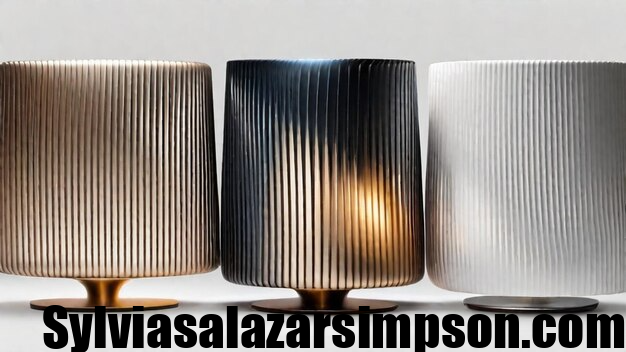
When you’re looking to refresh a room, most people think about a new rug or a fresh coat of paint. But if you want a change that actually impacts the vibe of your space, look at your lamps. The right lampshade doesn’t just cover a bulb; it dictates how light travels, sets the mood, and acts as a centerpiece for your decor. If you’ve started browsing, you’ve probably realized the options are endless. From classic square shades to sleek metal cylinders, the shape matters—but the lampshade material is what really does the heavy lifting. Let’s break down the four big players: fabric, paper, metal, and glass.
Top 4 Lampshade Material Options
Here are the top 4 options of lampshade material you can use for your house or office:
1. Fabric: The Cozy Classic
Fabric is the go-to for a reason. It’s versatile, warm, and comes in everything from breezy linen to heavy velvet.
- The Light: Fabric shades diffuse light beautifully. Depending on the thickness, they create a soft, ambient glow that makes a living room feel lived-in and comfortable.
- The Look: If you’re rocking square lamp shades, fabric is a fantastic choice because the seams can be tailored to look very high-end and architectural.
- Pro Tip: Linen is great for a casual, organic look, while silk adds a touch of “fancy” to a bedroom.
2. Paper: Minimalism with an Edge
Don’t let the word “paper” fool you into thinking it’s delicate. High-quality parchment or rice paper shades are sturdy and offer a very specific aesthetic that’s hard to beat.
- The Light: Paper is excellent for “clean” lighting. Because it’s usually more opaque than thin fabric, it directs more light out of the top and bottom of the shade rather than through the sides.
- The Look: Paper shades often have a mid-century modern or Japanese-inspired feel. They are perfect for budget-friendly makeovers because they look much more expensive than they actually are.
- Maintenance: Just be careful—paper can be a magnet for dust and is harder to clean than fabric. A dry microfiber cloth is your best friend here.
3. Metal: The Industrial Powerhouse
If you want a shade that makes a statement, go for metal. This isn’t about a “glow”; it’s about a “beam.”
- The Light: Metal is completely opaque. It means the light is funneled strictly up or down. It’s the ultimate choice for task lighting—think of a desk lamp where you need to focus on a book or a kitchen island where you’re prepping food.
- The Look: Metal shades lean heavily into industrial, farmhouse, or ultra-modern styles. They are incredibly durable and easy to wipe down, making them ideal for high-traffic areas or even the garage.
- Heat Check: Just remember that metal holds heat. If you’re using an old-school incandescent bulb, that shade is going to get hot! Stick to LEDs to keep things cool.
4. Glass: The Timeless All-Rounder
Glass is a bit of a wildcard. It can be clear, frosted, colored (like Tiffany style), or even seeded with tiny bubbles.
- The Light: Clear glass lets every bit of light through, which is great for brightness but can be a bit harsh on the eyes if you use a high-wattage bulb. Frosted glass, on the other hand, gives you that lovely “cloudy” diffusion.
- The Look: Glass is timeless. Whether it’s a vintage-style globe or a modern geometric design, it adds a layer of texture and reflection that other materials can’t match.
- The Risk: The obvious downside? It’s breakable. If you have kids or pets that treat your living room like a racetrack, glass might be a “wait until later” option.
Which One Should You Pick?
Think about the room’s purpose. If you’re reading, go for a metal or paper shade that directs light. If you’re relaxing with a glass of wine, a fabric shade provides that soft, moody atmosphere. And if you’re trying to show off a cool vintage Edison bulb, glass is the only way to go.
Matching the lampshade material to your lifestyle is the secret to a well-lit home. Don’t be afraid to mix and match, maybe fabric in the bedroom and metal in the office?
FAQs
Which lampshade material is easiest to clean?
Metal and glass are the winners here; a quick wipe with a damp cloth usually does the trick.
Can I use any material for square lamp shades?
Fabric and paper work best for square shapes because they can be stretched tightly over a frame to maintain those sharp corners.
Do fabric shades yellow over time?
Yes, especially if they are close to a heat-emitting bulb. Using LEDs helps prevent this discoloration.
Is paper a fire hazard?
As long as the shade is the correct distance from the bulb (check the lamp’s wattage rating), it is perfectly safe.
Which material gives the most light?
Clear glass allows 100% of the light through, while white fabric or paper provides the most “diffused” brightness.