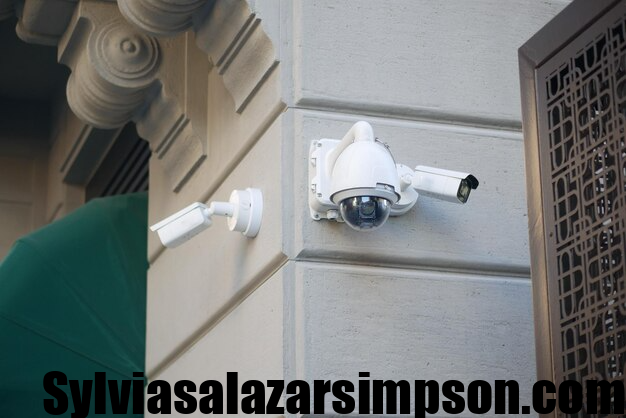
Have you ever looked at your standard home security camera systems and thought, “It’s great for the front porch, but what about that fence line 300 feet away?” If you’re trying to monitor a long driveway, a massive backyard, or a rural property, a standard wide-angle lens just isn’t going to cut it.
You’ll end up with a grainy video of a “blob” moving in the distance, which isn’t exactly helpful for identification. Enter the long distance security camera. These aren’t just your basic webcams; they are the “telephoto lenses” of the security world, designed to bring the far-off details right to your screen in crisp high-definition.
How Does a Long Distance Security Camera Actually Work?
The “magic” of a long range security camera usually comes down to three specific components working in harmony: the lens, the sensor, and the illuminators.
- Optical Zoom vs. Digital Zoom:
Standard cameras use digital zoom, which just enlarges the pixels (making the image blurry). A true long-distance camera uses optical zoom, where the glass lenses physically move to bring the subject closer without losing a single drop of image quality.
- Powerful IR (Infrared) LEDs:
Seeing far during the day is easy; seeing far at night is the real challenge. Long-range models come equipped with high-intensity IR illuminators that can throw light up to 300, 500, or even 1,000 feet, allowing the camera to see in total darkness.
- Vari-focal Lenses:
Many of these cameras feature a vari-focal lens, allowing you to manually or remotely adjust the focal length. You can set it to a “narrow” view to watch a specific gate far away, or “wide” to cover a broad field.
Where Should You Actually Use Them?
While they are impressive, you don’t necessarily need long range security cameras for a small suburban driveway. However, they are absolute lifesavers in these scenarios:
- Long Driveways: A camera mounted on the house can identify a license plate at the very end of a 200-foot driveway if it has the right focal length.
- Commercial Warehouses: Monitoring large parking lots or outdoor storage yards requires the “reach” that only these specialized cameras provide.
- Boats and Docks: If you live on the water, a long-distance camera can keep an eye on your boat tied up at the end of a long pier.
- Rural Properties: If you have acreage, you need to see who is at the perimeter before they get to the house.
Integrating with Your Home Security Systems
The best part about modern tech in 2026 is that you don’t need a completely separate setup for these powerful “eyes.” Most high-end long distance security cameras use PoE or Wi-Fi 6, meaning they can plug right into your existing NVR or smart home hub.
When you add a long-range unit to your home security camera systems, you’re essentially adding a “scout.” While your doorbell camera handles the packages, your long-distance camera handles the perimeter. It’s about layers of protection.
Final Thoughts
Upgrading your perimeter security doesn’t have to be a guess. By adding a dedicated long range security camera to your setup, you stop reacting to what’s at your door and start noticing what’s at your gate. It’s the difference between seeing a “shadow” and seeing a “visitor.”
FAQs
1. How far can a long distance security camera actually see?
While “seeing” movement can happen at 1,000+ feet, “identifying” a face or license plate usually requires a high-quality lens and tops out around 300–500 feet for consumer-grade models.
2. Can I use a long-range camera indoors?
You can, but it’s usually overkill. The narrow field of view makes it hard to see the whole room. They are specifically designed for wide-open outdoor spaces.
3. Do they work through glass windows?
Not well at night. The powerful IR lights will reflect off the glass and “blind” the camera. It’s always best to mount these directly outside.
4. Are they harder to install than regular cameras?
The wiring is the same (usually just one Ethernet cable), but “aiming” them takes more patience because even a tiny nudge can move the field of view by several feet at a distance.
5. Do I need special software to view the footage?
Nope! Most integrate perfectly with standard apps. Just make sure your NVR supports the resolution (like 4K) of the camera to get the most out of the zoom.