Humans spent millennia squatting in the bush long before the porcelain throne became a permanent fixture in our homes. While modern plumbing is a marvel of engineering, it has inadvertently created a physiological hurdle. The sitting position we have adopted over the last 150 years actually works against our internal anatomy. For many Australians focusing on gut health, the missing piece of the puzzle isn’t a new supplement but rather a simple structural adjustment to their morning routine.
The Science of the Puborectalis Muscle
To understand why bamboo stools are gaining traction, we have to look at the puborectalis muscle. This muscle acts like a natural “choke valve” for the lower digestive tract. When you are standing or sitting at a 90-degree angle, this muscle remains tight, maintaining a sharp bend in the rectum to ensure continence. It is a brilliant design for preventing accidents, but it is a major obstacle when you actually want to go. Clinical studies, including research from institutions like Ohio State University, have demonstrated that elevating the feet to a squatting position relaxes this muscle. This transition shifts the anorectal angle from a kinked 90 degrees to a straightened 126 degrees.
By using a stool, you are essentially unkinking the garden hose. This mechanical shift reduces the need for straining, which is a primary contributor to haemorrhoids, pelvic floor issues, and general discomfort.
Why Bamboo Outperforms Synthetic Alternatives
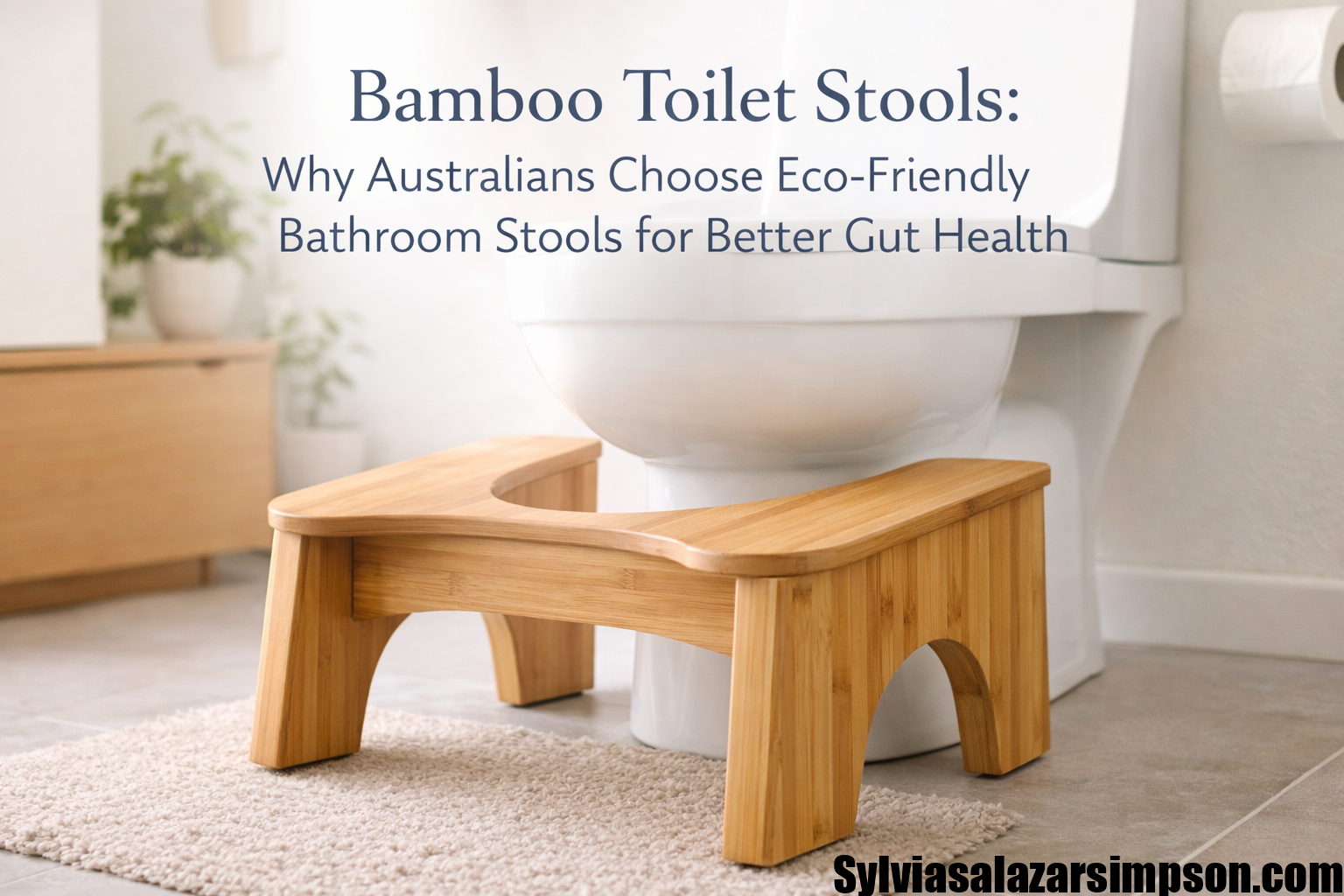
While any sturdy object could technically elevate your feet, bamboo has specific properties that make it superior for the bathroom environment. Bathrooms are high-moisture zones where plastic often fails the aesthetic and hygiene test. Bamboo contains a natural bio-agent called “bamboo kun,” which gives the plant an inherent resistance to pests and fungi. This makes it an exceptionally hygienic choice for a room prone to dampness.
Beyond hygiene, the structural integrity of bamboo is remarkable. It has a higher compressive strength than many alloys of steel and a higher tensile strength than most woods. Because it is technically a grass and not a hardwood, it does not swell or warp with steam in the same way traditional timber might. It provides a solid, non-slip foundation that feels secure underfoot, which is vital for a product used daily.
A Sustainable Shift for the Australian Home
Australians are increasingly mindful of the lifecycle of their household goods. Plastic stools are often made from petroleum-based polymers that eventually contribute to microplastic pollution. In contrast, bamboo is the fastest-growing plant on the planet. Some species can grow nearly a metre in a single day, requiring no pesticides and very little water compared to cotton or timber. Choosing eco-friendly bathroom furniture is about more than just a “green” label. It is about durability. A well-crafted bamboo stool is a legacy piece for your bathroom that won’t end up in a landfill after twelve months of use. It integrates seamlessly into the modern Australian aesthetic, offering a warm, organic feel that balances out the cold tiles and glass of a contemporary ensuite.
Achieving better digestive wellness is often a matter of returning to basics. By combining ancestral wisdom with modern sustainable materials, you can significantly improve your daily comfort and long-term gut health. Ready to experience a more natural way to go? View our collection of premium Bamboo Toilet Stools and give your body the alignment it deserves.
Frequently Asked Questions
1. Does squatting really help with constipation?
Ans. Yes. By straightening the anorectal angle, waste moves more freely and quickly. This reduces the time spent on the toilet and minimises the physical effort required, which is often the primary cause of constipation-related discomfort.
2. Is a bamboo stool difficult to maintain?
Ans. Not at all. Bamboo is naturally water-resistant. A simple wipe with a damp cloth every now and then is enough to keep it looking new. It is designed to thrive in the humid conditions of an Australian bathroom.
3. What is the ideal height for a toilet stool?
Ans. For most standard toilets in Australia, a 7-inch stool provides the perfect elevation to achieve a proper squatting posture. If you have an extra-tall toilet, you might consider a 9-inch model.
4. Can using a stool help with bloating?
Ans. By ensuring a more complete elimination of waste, many users find that they experience significantly less residual bloating and heaviness throughout the day.
5. Is the stool sturdy enough for adults?
Ans. Absolutely. Bamboo is incredibly strong. Our stools are engineered to support the weight of a grown adult comfortably, providing a stable platform that won’t wobble or slide during use.