The debate between fused deposition modeling and a resin 3d printer often comes down to resolution. Hobbyists, makers, and professional engineers constantly seek the ideal desktop manufacturing setup to bring intricate tabletop miniatures or complex functional hardware to life.
Choosing the right machine dictates whether your final model shows harsh, visible layer lines or a smooth surface. We must examine the core mechanical principles behind these two technologies to find your resin printer match and ensure your best 3d printer choice meets your creative goals.
The Core Mechanical Differences
Finding the best resin 3d printer requires understanding underlying hardware limitations before making a purchase. Extrusion machines push melted plastic through a heated metal nozzle. They build objects layer by layer, but the nozzle physical diameter typically limits how small printed features can actually get.
Extrusion Nozzle Constraints
Most standard desktop filament machines utilize a standard 0.4 millimeter nozzle. This physical size often creates visible ridges on curved surfaces, making it challenging to capture the subtle textures needed for high-fidelity jewelry casting or small electronic device housings.
The Microscopic Precision of Light
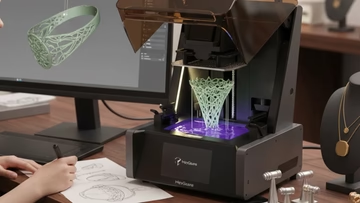
In contrast, a modern resin 3d printer uses targeted ultraviolet light to cure liquid photopolymer. Modern LCD screens push pixel sizes down to roughly 30 microns, allowing for microscopic accuracy that virtually eliminates the visible staircase effect on small, detailed parts.
How Resolution Impacts Surface Quality
When evaluating micro-detail capabilities, we look at the minimum feature size possible on the XY axis and the layer height on the Z axis. Both critical factors largely determine the final texture and the perceived best 3d printer performance.
Z-Axis Layer Height Superiority
While FDM struggles below 0.1mm layers without significant reliability issues, a resin 3d printer easily achieves 0.025mm layers. This vertical precision ensures that curved surfaces appear organic and injection-molded rather than mechanically stepped, which is essential for professional prototyping.
XY Accuracy and Feature Sharpness
The light-masking technology allows for sharp corners and crisp edges that filament nozzles simply cannot mirror. This ability to resolve fine text and intricate patterns makes photopolymer systems the best 3d printer category for artists requiring high-fidelity output.
Assessing Workflow and Material Trade-offs
Print quality is only one part of the equation when selecting the best 3d printer for your workspace. You must also consider the post-processing workflow and the mechanical properties of the cured material you are handling daily.
Handling Post-Processing Steps
Liquid photopolymer requires thorough washing in solvent and dedicated UV curing after printing. You must wear nitrile gloves and manage chemical disposal properly. Filament machines, however, produce solid plastic parts often ready to use right off the heated build plate.
Structural Integrity Considerations
Early photopolymers were occasionally brittle and fragile. Today, advanced engineering materials offer impressive impact resistance and flexibility. However, extruded plastic filament still generally provides superior tensile strength for large, load-bearing mechanical components used in heavy-duty or structural hardware applications.
Support Removal Differences
Support structures on a high-resolution resin 3d printer often detach cleanly with minimal surface scarring. Conversely, extruded plastic supports tend to physically fuse with the main body, often requiring manual sanding to restore the underlying fine surface details.
| Feature | Fused Deposition | Photopolymer Resin |
| Micro-Details | Poor | Excellent |
| Part Strength | High | Moderate |
| Surface Finish | Rough | Smooth |
Industry Shifts Toward Automation
Modern systems have minimized the learning curve for photopolymers. Integrated features like auto-leveling and heated vats now streamline the workflow significantly, making the modern resin 3d printer more reliable for non-technical users.
Smart Features and Usability
Evaluating these integrations is vital when identifying the best 3d printer that successfully merges professional precision with reliable usability. Automated resin management ensures that high-resolution projects remain consistent, reducing the manual intervention typically required in older hardware generations.
Streamlining the Ecosystem
A cohesive hardware ecosystem reduces common failure points during the printing process. This reliability allows creators to focus on design rather than constant machine maintenance, making the resin 3d printer experience more accessible than ever for desktop users seeking industrial results.
Conclusion
Choosing between fabrication methods depends on your specific geometry and strength needs. Fused filament excels at large, economical structural components. However, a resin 3d printer remains the superior choice for achieving microscopic details and flawless surface quality on intricate designs or small, high-precision parts.